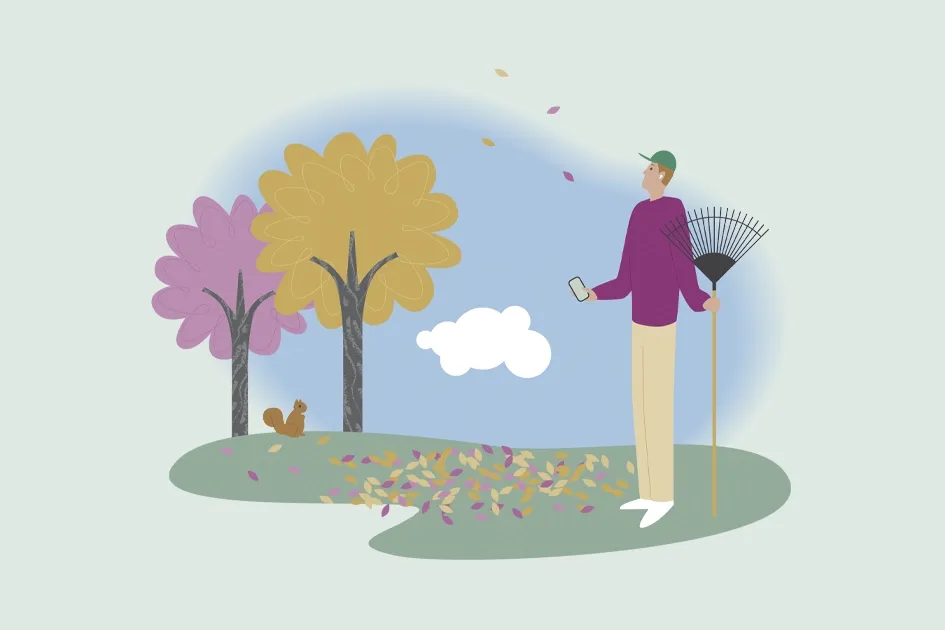
According to the author of Hebrews, we all have a race set before us (Heb. 12:1). I guess I just didn’t expect there to actually be so much running involved. Between commutes, jobs, house chores, homework, extracurriculars, serving at church, and all the little things it takes to run a household, life can feel pretty full. And all the things we pursue for ourselves and our families, while good, are subject to frustration and what I like to think of as friction.
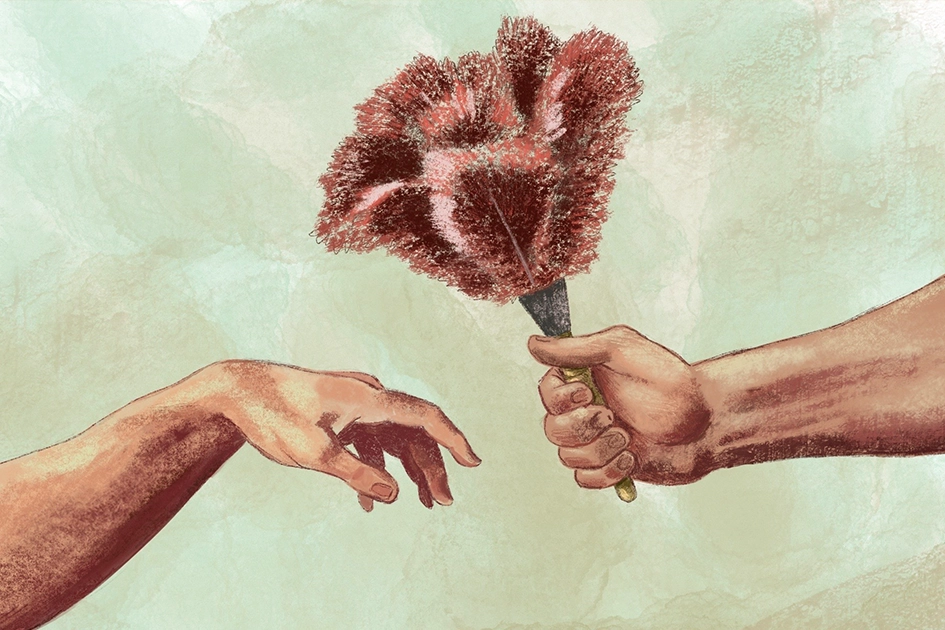 Illustration by Jeff Gregory
We all run our race in some corner of a fallen world, trying to make our way the best we can. You know how it feels. Maybe you forgot to put the carafe in the coffee maker, and when it clicked on in the morning, it brewed a whole pot right onto the counter. Or maybe you’ve sprinted from work to school for pickup, when inevitably someone has hit a telephone pole and cops have blocked off the intersection. Perhaps a computer crashes right before you hit save on the big presentation that’s due tomorrow, and in the midst of it all, you remember the kids ate dry cereal this morning because you ran out of milk. No matter what, you still have to get groceries on the way home. Rough days.
If you’re like me, you can feel stretched thin. Is it any wonder that a whole ecosystem of services and apps has grown up, promising us “frictionless living”? We have a realm of services, once imaginable only for kings, on offer to us. Groceries brought to our doorstep. Robot vacuums. Automatic pet feeders. Remote locks. We have the ability, for a fee, to be spared from a great deal of toil and given our freedom.
But freedom from what? And, probably more important, freedom for what?
When it comes to convenience, we risk falling into two different errors. In my house, especially when the weather’s cold, there’s a time of day we call “schlubby time.” Those hours at the end of the day when all garments with buttons or zippers are exchanged for soft elastics or, at most, a drawstring. Once that time of day hits, you’re not leaving the house again.
Don’t get me wrong, I love those relaxed hours. But a whole life of “schlubby time” probably wouldn’t be healthy. Yet in our day and age, it’s entirely possible. We can live our lives cloistered away in our pajamas and never have to deal with traffic and “real” pants … or people.
But there’s virtue in going to the trouble. In venturing out. Back in the garden of Eden, before the fall and the curse on our work, God made the observation that it wasn’t good for man to be alone (Gen. 2:18), While we might prefer to cocoon ourselves in the silk of convenience, that’s not how we were made. We were made to move around in the world, navigating it with mind, soul, and body. When we’re tired, this can be difficult to remember, but there’s virtue in going to the trouble of a chore because it re-engages us with the world in ways that adding stuff to an online cart simply doesn’t.
A chore like grocery shopping can force the rest of the day to go on pause—a kind of tangible time-out. We have to stop answering emails or work texts to accomplish it. We might even choose to turn off the podcast, listen to whatever music is playing, or take a moment to think. We can marvel at the sheer abundance of food on the shelves. Choose the most beautiful tomato, the perfectly ripe avocado. Help someone reach something on the top shelf (or ask someone to reach it for you). Wait in a line without blindly scrolling on a phone. Talk to a cashier. Thank someone for bagging the groceries.
The second error we can fall into with frictionless living is something I call “serving the frenzy.” In this case, we’re not using convenience to disengage from the world. Rather, we are so hyper-engaged that we can’t fathom stopping—even for a moment. In a particularly busy season, something like grocery delivery can be a blessing. But there’s a danger that we might not always care to acknowledge: What if that “busy season” never really ends?
Usually we say “yes” to things because we think they’re good. A promotion at work means more money for our family. Having kids involved in sports or the fine arts helps them be well-rounded. But before we know it, work schedules are packed. Kids’ schedules are full. Weekends, paradoxically, are even busier. Days off are anything but.
Sometimes there are important, hard questions to ask. Is my job asking me to sacrifice too much? Does my kid’s after-school activity demand too much? Would my church be OK if I let someone else volunteer for this committee? In other words, Would life go on if we said “no” sometimes? The danger of frictionless time saving is, it can give us the opportunity to avoid asking those very necessary questions. We use apps while waiting in the carpool line to save time … in order to stay busy.
We weren’t made for frenzy any more than we were made to retreat from the world. Both errors cut us off from the same thing: the slow, embodied work of paying attention to where we actually are. God meets us in the grocery aisle, the sink full of dishes, and the methodical pushing of a vacuum cleaner, but only if we’re willing to be there. When we’re tired, we might find grace in doing a chore the slow way rather than putting it off. There might even be rest in that work.
There’s a poem called “Testament” by Wendell Berry—a writer whose life spent farming the same Kentucky land has shaped a body of work deeply attentive to creation, labor, and what we owe each other. The poem is about living this life in light of the next, and the line that has stuck with me reads: “Remember that the Heavenly soil / Need not be too rich to please / One who was happy in Port Royal.”
Port Royal, the small town Berry calls home, is a place full of people who embrace hard work. The vision here is that heaven isn’t a frictionless eternity where work has been abolished. It’s a paradise where work is no longer cursed. It’s a delight. We’re not there yet. But picking the perfectly ripe tomato, thanking the cashier by name, washing the dishes by hand—these don’t have to be chores we could’ve outsourced. They’re foretastes of something divine, if we’ll slow down enough to enjoy them.