In the 2017 picture book The Bad Seed, we meet a cynical sunflower seed who takes great pride in telling everyone just how “baaaaaaaaaaad” he is. He’s rude. He lies. He lacks self-awareness. He’s chronically unhygienic. None of the other seeds like him. Parents warn their children about him. And the Seed, well, he seems to relish it all.
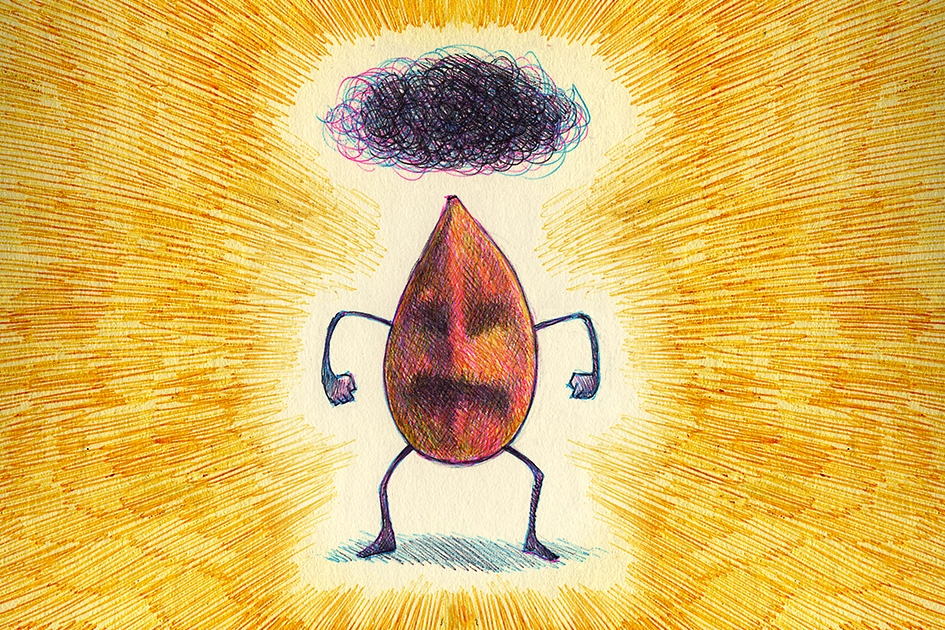 Illustration by Jeff Gregory
Until he doesn’t.
About halfway through the book, readers learn the Seed’s backstory is one of loneliness, tragedy, and purposelessness. But by the end, the Seed turns things around, becoming only half-bad, if not actually good.
The Bad Seed is a silly story, and kids like it for that reason. But behind the clever prose, author Jory John gives us clues about what it takes to live a good life. The Seed says, “Even though I still feel bad, sometimes, I also feel kind of good,” a picture book version of Paul’s spiritual conundrum in Romans 7: “For the good that I want, I do not do, but I practice the very evil that I do not want” (Rom. 7:19).
So how do we live such a life?
The Work of Suffering
In The Bad Seed, a good portion of the story is dedicated to recounting the Seed’s difficult past. Through no fault of his own, an otherwise “good seed” was separated from his family and endured a near-death experience. When he woke up, alone and desperate, he believed that he was bad.
Who of us hasn’t felt the same way? When bad things happen to us, we (or others) assume it’s because we’ve somehow earned it. The same is true with good things. But Jesus said it’s not what happens to us that makes us bad or good. It’s what’s happening on the inside that matters: Christ transforming our hearts (Rom. 10:9-10) and us living transformed lives despite our circumstances (Luke 6:45).
Even if we don’t believe we deserve bad things, when they happen, they might stir up anger and bitterness. For example, in the book of Ruth, after Naomi experienced a famine, the loss of her home, the death of her husband and sons, and abject poverty, she said to all who asked, "Do not call me Naomi; call me Mara, for the Almighty has dealt very bitterly with me. I went out full, but the Lord has brought me back empty” (Ruth 1:20-21).
Over time, however, things changed for Naomi. And the same can be said of us. As we continue through suffering, we find that the bad things don’t make us bad; rather, God is using them to help us become the people He created us to be.
In Romans 5:1-5, Paul goes so far as to say we should “exult in our tribulations” and then traces a progression from one virtue to another. Tribulation produces perseverance, perseverance produces proven character, and proven character produces hope. And this hope doesn’t disappoint us, “because the love of God has been poured out within our hearts through the Holy Spirit who was given to us” (v. 5).
The Seed couldn't see it from inside his pain, and neither could Naomi. Most of us can’t, if we’re being honest. But the suffering, in God's hands, is doing the slow work of making us good. And thankfully, suffering isn’t where the story ends.
The Gift of Community
The Seed tracks his downward path not only by the bad things that happen to him, but also by his relationships with others. At first, he keeps to himself and is a “friend to nobody,” but later, when he does interact with others, he does so in a negative way—and the results are usually unfortunate. In fact, the way he defines his “badness” rests almost entirely on the way he treats the nuts and seeds around him. But when he decides to change, he knows that his goodness, imperfect though it may be, is best demonstrated by how he acts toward others.
Jesus’ work in our own lives is similarly other-centered. Throughout the New Testament, particularly in Jesus’ teachings, we find the dual command to love God and our neighbors. While loving God always comes first and encompasses so much more than our interactions with fellow humans, it’s never less than or separated from our relationships with people. John goes so far as to say that “the one who does not love his brother whom he has seen, cannot love God whom he has not seen” (1 John 4:20).
All the “one another” commands throughout the New Testament make more sense when we realize that God has given us each other—both to reveal areas where we need to grow and to be the means of that growth. Like the Seed, we won’t always love perfectly, but we hang in there. We keep trying. And slowly, we become who God always meant for us to be.
The Freedom of Identity
Finally, one of the most interesting parts of the Seed’s bad behavior was how much he defined himself by it. Of course, this is a sunflower seed we’re talking about, but interestingly, his name is never used. He’s totally defined by his negative actions.
We can also fall into the same trap of identifying ourselves (or others) only by weaknesses: We’re the overbearing boss, the chronically late parent, the uncaring spouse, the grouchy neighbor. These labels reduce people to the things that irritate or separate us. Of course, we sometimes fall into the opposite camp, focusing on the actions we think make us seem virtuous. Both fail to tell the whole story.
As God’s children, we find our identity in our heavenly Father. We belong to Him (1 Cor. 6:19-20). Like the Seed who keeps reminding himself he’s “not such a bad seed after all,” we need to cling to our identity as God’s children and find our goodness there.
Virtuous living isn’t an end in itself, something that makes us socially acceptable. When we live a truly good life, we’re not following a list of rules or living up to some human standard. Rather, virtuous living is about stepping into the purposeful and communal life for which God designed us from the very beginning. Like the Seed, we’re becoming who we always were in God’s eyes.