Have you ever felt out of place? As if you don’t fit in and would rather be at home? That’s how many people feel when stepping into our churches for the first time. It can be like visiting a distant land where men and women are speaking a strange language and practicing foreign customs never seen before.
We want to show hospitality as churches, and care for visitors. How can we do this well? A good place to start is to see how God treats outsiders. The Hebrew word ger, for “sojourner,” shows up 92 times in the Old Testament and is also often translated as “immigrant,” “alien,” “foreigner,” or “stranger.” Throughout the biblical story, God shows special care and concern for these outsiders.
God’s Nomadic People
God calls His people to care for foreigners; this is true, important, and frequently discussed. But a foundational theme that’s often underemphasized is how often in the biblical story God’s people are foreigners.
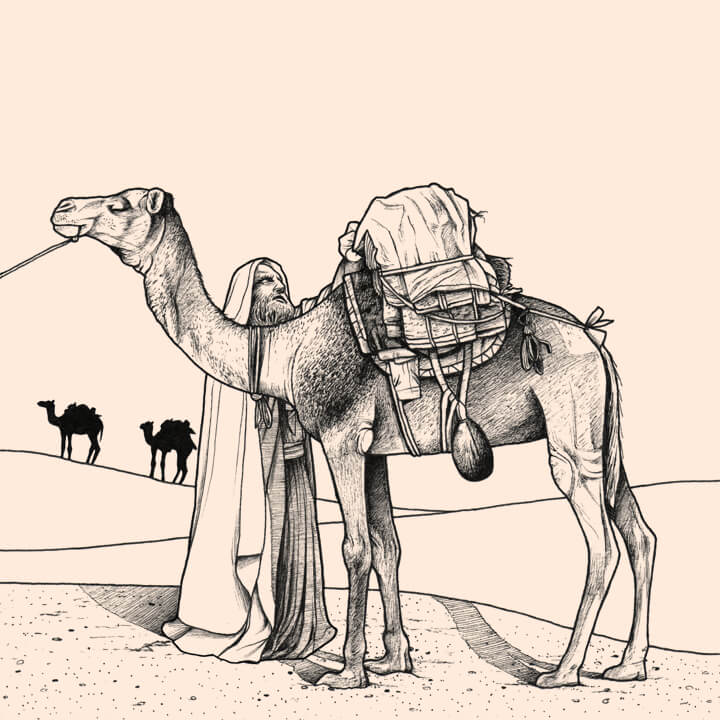
Abraham is called by God to leave his country and emigrate to a new land (Gen. 12:10; Gen. 20:1; Gen. 23:4). So he packs up the camels and heads out west, a wanderer who eventually settles in Canaan and sets up housekeeping as a resident alien. And he’s not alone. The patriarchs were relatively rootless: Jacob, Judah, and Joseph’s stories were all shaped by migration. By the end of Genesis, the only plot of Promised Land owned by God’s people was a grave for Sarah, Abraham’s wife (Gen. 23:2-20). This little macabre outpost was more than a tomb: It was a colony in the midst of the country that would eventually become their kingdom.
Israel knew what it was like to be mistreated by hostile host countries during their wandering years. So it comes as no surprise that when the nation finally inherited the land, resident sojourners received special legal protection. God’s people knew firsthand what it was like to be in their shoes. In fact, Israel still understood herself to be a “resident alien” (ger) residing on ground that ultimately belonged to God (Lev. 19:33-34).
In the New Testament, this theme continues. The church sojourns as strangers on earth, with our true citizenship in heaven (1 Peter 1:17; 1 Peter 2:11). Strangers and pilgrims in this passing age, we are—like the patriarchs of old—characterized by a nomadic existence while awaiting the promised inheritance of land beneath our feet (Heb. 11:9-16). God’s coming kingdom will bring heaven to earth: He will tear down the institutions of our exile and replace them with our new home in the holy city, where we’ll dwell with Him forever (Rev. 21-22).
Caring for Strangers
So God’s people often are sojourners, and we are also called to care for the strangers in our midst. When Israel was given the law at Mount Sinai, foreigners received special attention and legal protection (Ex. 22:21; Ex. 23:9). This was important because immigrants lacked extended family and social networks, both of which were significant for survival in the ancient world.
As Christ has welcomed us into His home with the Father, we are to welcome, embrace, and care for the outsiders in our midst.
One of the reasons for this legislation, God reminded His people, was that they’d once been in the same predicament themselves: “Do not mistreat or oppress a foreigner, for you were foreigners in Egypt” (Ex. 22:21 NIV). Israel was not to repeat Egypt’s mistakes, which is why God commanded them to love foreigners as themselves (Lev. 19:34). Nearby countries had laws that protected widows and orphans, but Israel was unique in caring for outsiders as well.
The gleaning laws are a poignant example of this decree. “When you reap the harvest of your land,” Israel was told, “you shall not reap to the very corners of your field nor gather the gleaning of your harvest; you are to leave them for the needy and the alien” (Ex. 23:22). This was like leaving money around the edges of your house for poor people to come pick up. They still had to work for it, gathering the food they would take home to put on the table. But if you were a foreigner, it was like a social safety net against unemployment and starvation.
In the New Testament, Jesus’ followers are also called to care for foreigners and help strangers by practicing “hospitality.” The word here is philoxenos, which literally means “loving strangers” (1 Peter 4:9; Rom. 12:13). As Christ has welcomed us into His home with the Father, we as His church are to welcome, embrace, and care for the outsiders in our midst. And when you love the stranger, you may find yourself surprised at who they actually turn out to be. The author of Hebrews reminds us, “Do not forget to show hospitality to strangers, for by so doing some people have shown hospitality to angels without knowing it” (Heb. 13:2 NIV). Jesus Himself says that whether we know it or not, when we love the vulnerable outsider, we’re actually caring for Him (Matt. 25:31-46).
A Welcoming Messiah
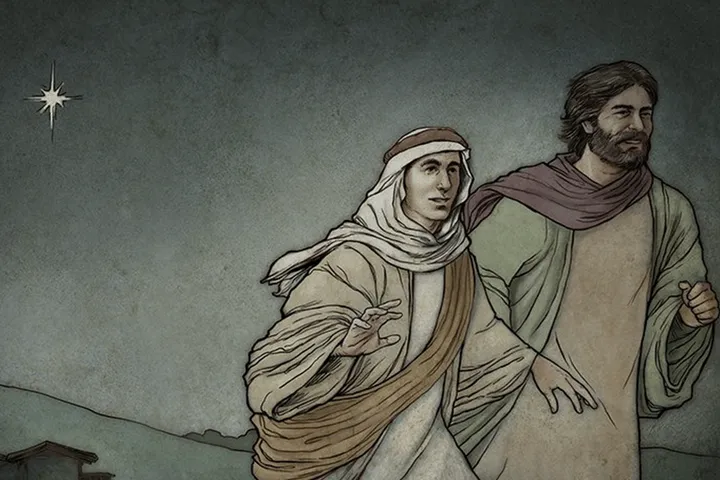
Jesus practiced what He preached; we see this theme clearly in His life and ministry. Foreigners arrived from far-off lands to celebrate His birth, a sign of the promised messianic king whose rule would be for all nations (Matt. 2:1-12; Isa. 60:3). The Savior hung out with a Samaritan woman, cast a demon out of a Canaanite daughter, and healed a royal official’s son and a group of lepers (Matt. 15:21-28; Luke 17:11-21; John 4:1-26; John 4:46-54).
Through Jesus’ atoning death, He opened up the abundance of God to all of us foreigners far and wide.
While Jesus came “first to the Jew, then to the Gentile” (Rom. 1:16 NIV), through His atoning death, He opened up the abundance of God to all of us foreigners far and wide. God’s original promise to Abraham, to bless all nations through his descendants (Gen. 12:2; Gen. 18:18; Gen. 22:18), is fulfilled in Christ. Hence, it is fitting that a Gentile soldier was the herald who first proclaimed, in a posture of praise, the death of Christ (Luke 23:47).
The Savior’s death broke down the dividing wall that kept Gentiles separate from His people (Eph. 2:14-18). And now, through the power of His resurrection, Jesus welcomes all who will come, offering citizenship in His mighty kingdom to any who kneel before Him. So as His followers, we should—with open arms—welcome into our lives those outside the faith and church. It’s true, sometimes your pagan neighbors, agnostic coworkers, and friends from other religions may act in ways that seem bizarre, may come from backgrounds that surprise you, and may say strange things that sound like an interstellar language. You might be tempted to avoid or distance yourself and treat them as if they’re from another planet. But when that happens, it’s helpful to remember this enduring truth: God loves strangers. And if we love God, we should too.
Illustration by Adam Cruft