My kids hate washing their hands. Their fingers could be caked in mud from playing outside, and they’ll still fight me tooth and nail about scrubbing up before dinner. As they sit down to the table, I’ll ask, “Have you washed yet?” Even if they say yes, I’ll still sniff their palms to verify (they’ve been known on occasion to try slipping a fast one by me). I’m no germophobe, mind you. I’m invested in their cleanliness because I care about their health.
Similarly, God is concerned with our purity because He cares about us. He wants us to be healthy both physically and spiritually. Sadly, the word purity today is burdened with negative connotations like “priggish,” “uptight,” and “puritanical.” However, a closer look at the Hebrew words for “pure” and “clean” (niqqayon and naqiy respectively) reveals a God who is concerned with so much more than good hygiene.
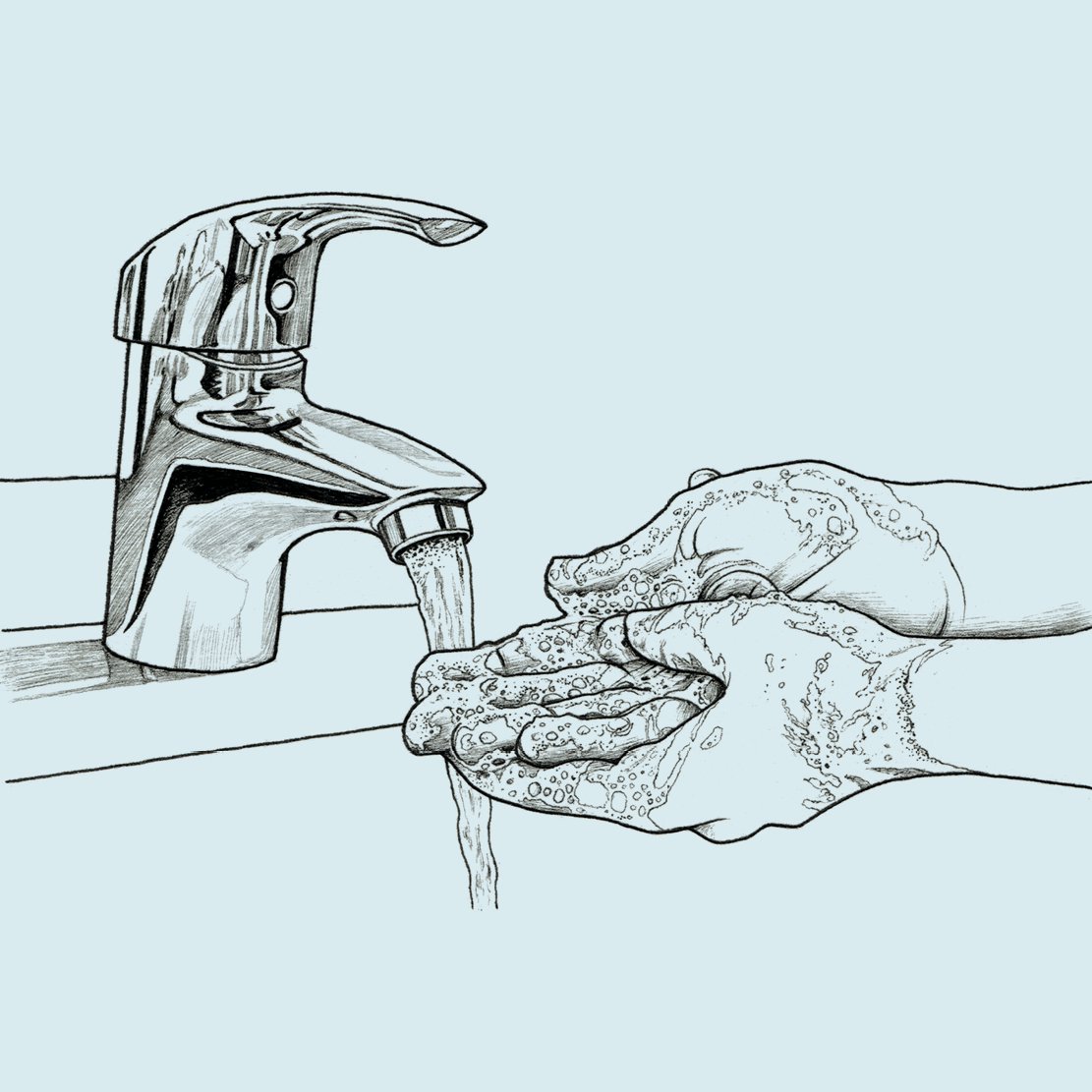
Scripture regularly uses the image of clean hands to symbolize what it means to live with moral integrity. “I shall wash my hands in innocence,” the psalmist says, “and I will go about Your altar, O Lord” (Psalm 26:6). Likewise, David asks, “Who may ascend into the hill of the lord? And who may stand in His holy place?” and then proceeds to answer his own question: “He who has clean hands and a pure heart, who has not lifted up his soul to falsehood and has not sworn deceitfully” (Psalm 24:3-4). Notice how clean hands are associated with a pure heart and the ability to enter God’s presence. This is why, when Asaph suffers righteously yet observes the prosperity of the wicked around him, he sings a protest song: “Surely in vain I have kept my heart pure and washed my hands in innocence” (Psalm 73:13).
The image of clean hands and a pure heart speaks to living with integrity on both the inside and the outside. This means it’s not only about our actions but also about our motives. Consider the case of King Abimelech, for example. God confronts the king when he is about to sleep with Sarah, Abraham’s wife. The king rightly protests, however, that Abraham lied to him by claiming Sarah was his sister. So Abimelech can truthfully say he has acted with “a clear conscience and clean hands” (Gen. 20:5 NIV). Unlike my kids, who lie at times about their hands being clean, he was telling the truth.
Keep Contagion at Bay
God’s concern isn’t just for our own sake when it comes to purity, but also for those around us. Disease spread quickly in the ancient world. In an age before modern medicine and vaccines, good hygiene was crucial to keep the contagion at bay. That’s why purity was a powerful image in a day when washing your hands was not only a smart thing to do but could also be a matter of life or death.
People with conditions like leprosy had to shout “Unclean!” to protect the health of the broader population. Similarly, moral sin has a way of spreading.
This helps make sense of some of the purity laws in the Old Testament, which dealt with not just moral impurity but actual physical impurity. People with conditions like leprosy or other infectious diseases had to shout “Unclean!” when others drew close (Lev. 13-14). This was something like an ancient version of a quarantine, to protect the health of the broader population from an outbreak or epidemic.
Similarly, moral sin has a way of spreading, of affecting those around us in disastrous ways. Calling Israel “incapable of purity,” the prophet Hosea laments that they’ve “rejected what is good” (Hos. 8:3; Hos. 8:5 NIV) by worshipping idols and breaking God’s law. Sin is like a dangerous wildfire that can ravage God’s community; purity seeks to keep the blaze in check. When we sin, the destructive force of our actions can impact those around us. Consider Achan, who has stolen forbidden plunder in Jericho. After he and his family are put to death for his transgression, all Israel has to wash and consecrate themselves to remove the stain of guilt from their midst (Josh. 7:13).
Washing is also an image of preparing for communion with God. Israel is regularly told to wash and consecrate themselves in preparation for sacred ceremonies (Ex. 19:10; Ex. 19:14; 1 Samuel 16:5). Likewise, when Israel’s priests are told to “purify [them]selves” and “touch nothing unclean,” it’s because they are the ones who are preparing to “carry the vessels of the lord” (Isa. 52:11). Barar, a different Hebrew word for “pure,” is used here but the concept is the same. They are washed to be set apart in holy devotion to the presence of God.
It turns out there’s some truth to the old saying “Cleanliness is next to godliness.” (The phrase actually comes from a John Wesley sermon in 1778.) It’s not that we must clean ourselves up to be good enough for God to be with us. Rather, God’s goal is to cleanse us so we can stand to be with Him in the wholeness of the life we were made for—life in His holy presence.
Clean on the Inside
Which is more important—clean hands or a pure heart? Jesus makes it clear that what’s on the inside has higher priority. In Mark 7, the Pharisees critique Jesus’ disciples for not washing hands before they eat. Jesus confronts them, however, saying, “Listen to Me, all of you, and understand: there is nothing outside the man which can defile him if it goes into him; but the things which proceed out of the man are what defile the man” (Mark 7:14-15). A few verses later, He explains that what you eat goes into you, entering your stomach, not your heart. The evil things that come out of you, however, originate from your heart—and this is of grave concern.
Blood tends to soil clothes rather than make them clean. Yet Jesus’ blood works in the opposite way.
Jesus is not saying personal cleanliness doesn’t matter. He is emphasizing that the condition of your heart is a much more serious matter. The heart is the seat of your affections, directed toward what you most love. This is also the place from which evil arises when we rebel against God and devote ourselves to things He has forbidden. Letting our loves become disordered can defile us in an eternally serious way.
Our hearts get stained and dirty by the corrosive power of sin, so we should take care to wash them as we do our hands. How is this done? A classic hymn points the way: “There is a fountain filled with blood drawn from Immanuel’s veins, and sinners plunged beneath that flood lose all their guilty stains.”
That’s a strange image: Blood tends to soil a person’s clothes rather than make them clean. Yet Jesus’ blood works in the opposite way: His sacrificial love for us, through the power the cross, has the strength to wash and make us whole. It’s more powerful than any detergent. That’s why the apostle John encourages us that the blood of Jesus “cleanses us from all sin” (1 John 1:7). Jesus out to make us spic and span not just on the outside; He wants to purify us in the innermost places as well.
So why not come to Him for mercy? He freely offers the solution. There’s only one real problem: pretending we’re already clean. Or, as John puts it, “If we say that we have no sin, we are deceiving ourselves and the truth is not in us. If we confess our sins, He is faithful and righteous to forgive us our sins and to cleanse us from all unrighteousness” (1 John 1:8-9). So don’t be like my kids and pretend you don’t need washing. Come to the One who can cleanse and make you whole.
Illustration by Adam Cruft