“Mamaaaaa!”
I can still hear myself screaming it in that particular pitch of terror that only a child in the dark can reach.
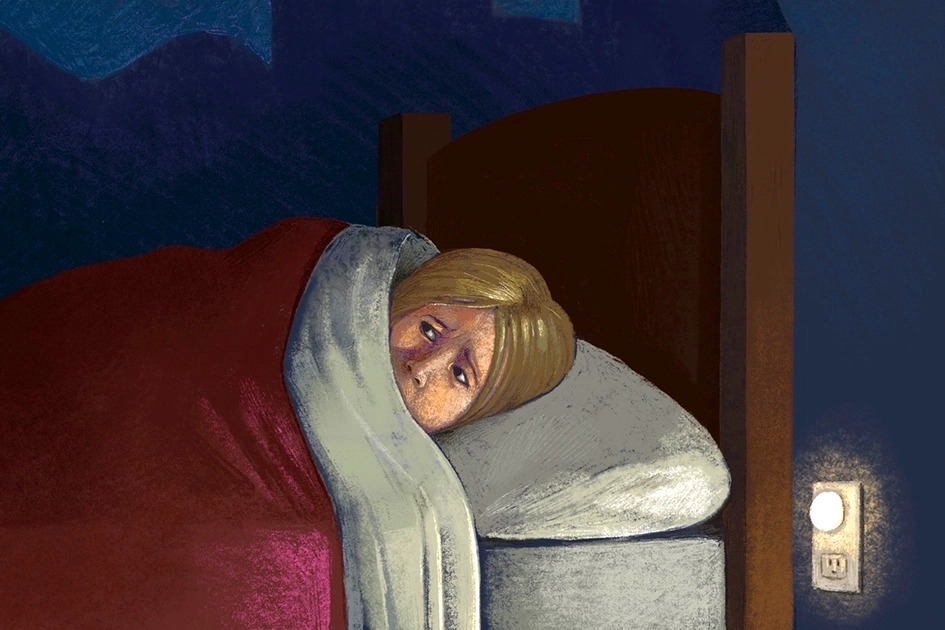 Illustration by Jeff Gregory
After a goodnight kiss, my mother turned off the light, and that’s when the first monster I remember arrived: Fear. Plunged into darkness, I couldn’t see what was around me. I was alone in my bed. And for reasons I couldn’t quite explain—too many Scooby-Doo cartoons, perhaps—I was absolutely certain something scary was lurking nearby, waiting for me to move before it struck.
My mother’s solution was a night-light in the hallway. It helped less than she’d hoped. It traded pitch-black darkness for murky shadows that shifted whenever a car drove by outside. If anything, the movement only confirmed my suspicions. The monster was real. It was there. I just couldn’t quite see it.
For a long time, fear of the dark kept me from sleeping peacefully. I didn’t know it then, but it was only the first of many monsters that would keep me up at night.
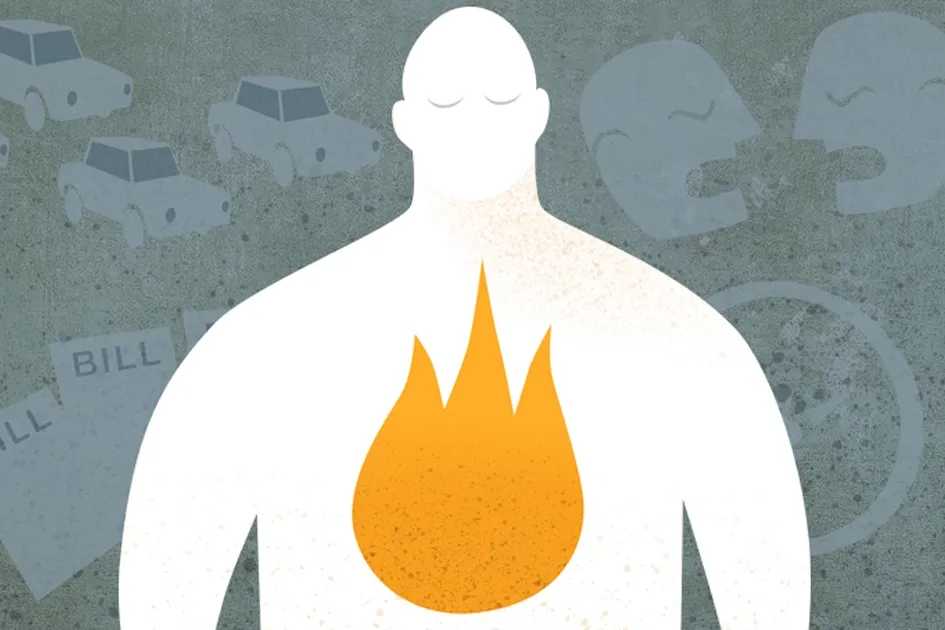
We all have our monsters. They change shape as we grow. The ones that threaten us in adulthood don’t hide under beds or behind doors. They’re subtler, more sophisticated. Some announce themselves loudly—addiction, anger, despair. Others slip in quietly, disguised as something reasonable before tightening their grip. But whether our monsters make a bold entrance or sneak in through the back door, they all share the same basic nature: They pull us away from the peace and presence of God.
Fear is a natural emotion—as are anger, joy, grief, and love. These are all part of the human experience. But when fear, or any other emotion, gains power over us and causes us to distrust God, it becomes sin. We tend to think of sin in its most dramatic forms—an obvious moral failure or headline-worthy transgression. But Scripture casts a wider net: “Whatever is not from faith is sin” (Rom. 14:23). Even a normal human reaction like fear—designed by God to warn us of real danger—can quietly become something that stops us from believing what we know to be true about Him. Sin isn’t always a behavior. Sometimes it’s a posture, a pattern of thought, or a subtle habit of centering our life on something other than God.
That’s the monster underneath all the other monsters. Not the fear or addiction or bitterness, but the soul turned away from the One who is its true home.
I eventually overcame my fear of the dark—not by becoming braver, but by learning something true about my Father. Someone taught me these verses: “[He] will neither slumber nor sleep” and “The darkness is not dark to [Him] … Darkness and light are alike to [Him]” (Ps. 121:4; Ps. 139:12). And more than that: “Greater is He who is in you than he who is in the world” (1 John 4:4).
The verses didn’t work like a spell. I didn’t recite them once and feel my fear vanish. But slowly—night after night, as I learned to whisper them into the dark—they did something. Knowing my Father was powerful and near gave me the courage to tell Him about my fears. And in His presence, the monster lost its hold. The darkness didn’t disappear, but Jesus—the One far greater than the darkness—was with me in it.
The same is true now, with the grown-up monsters.
Our Creator knows that “we are but dust” (Ps. 103:14). We all sin, and our Father doesn’t reject us when we do: “There is now no condemnation for those who are in Christ Jesus” (Rom. 8:1). I’ve learned that when sin, in whatever form it takes, comes to threaten me, I can reach out the same way I did as a child—only now the prayer is different: Father, help me.
Sometimes that prayer comes in the middle of temptation, when I can feel the pull of something that promises comfort but will only leave me empty. Other times it comes after—when I need to be cleansed from sin’s effects, from the wreckage it leaves behind in my life or someone else’s. Either way, He graciously approaches, ready to help and to heal. (See 1 John 1:9; Ps. 55:16.)
And here is the most remarkable thing: “Where sin increased, grace abounded all the more” (Rom. 5:20). God’s grace doesn’t just grant forgiveness; it meets us in the monster’s stronghold and makes something new there. The soul that has struggled and been carried through doesn’t return to where it was before. It comes back changed—aware, in a way it wasn’t, of how deep the love of God reaches.
You may be facing a monster right now. It may be loud and destructive or quiet and creeping. It may look like a personal failure, a destructive habit, a fear you’ve carried for years, or a heartbreak that has slowly turned to bitterness. Whatever shape it takes, the best defense is the same one I learned as a child terrified of the dark: Cry out to your Father. The cry isn’t a magic word, and the monster may not vanish overnight. But the One who hears you neither slumbers nor sleeps. The darkness is not dark to Him. And He is greater—immeasurably greater—than anything you face.